
Latency vs. Mbps: The Internet Speed Secret Most Providers Don't Talk About
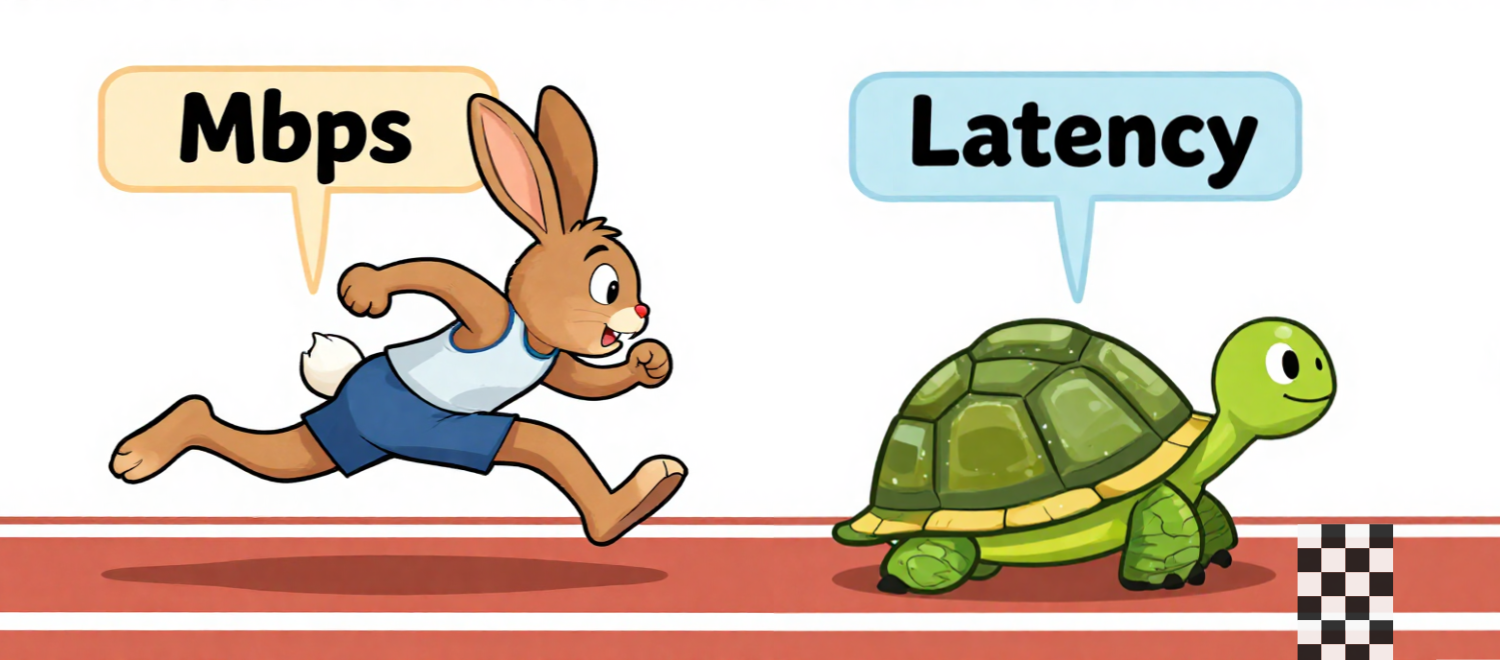
When shopping for internet service, you've probably seen advertisements promoting bigger and bigger speed numbers.
"Get 300 Mbps!"
"No, wait... get 500 Mbps!"
"Actually, you should get 1 Gig!"
"Better yet, let's make it 2 Gig!"
It sometimes feels like internet providers are locked in a competition to see who can advertise the biggest number. Most providers focus heavily on speed because it's easy to market. Bigger numbers sound better. But what many customers don't realize is that speed is only part of the story.
In fact, one of the most important factors affecting your internet experience is something most advertisements rarely mention: Latency
Understanding the difference between Mbps and latency can help you make a better decision about your internet service and avoid paying for more speed than you actually need.
What Is Mbps?
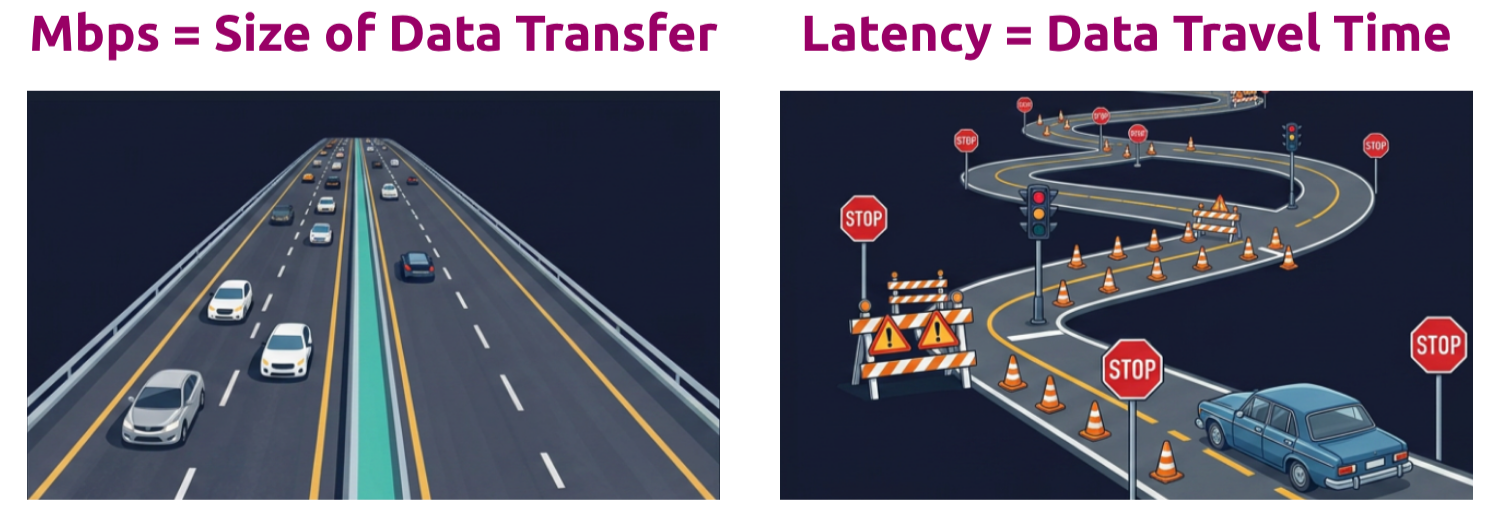
Mbps stands for Megabits per Second and measures how much data can be transferred over your internet connection.
Think of Mbps as the width of a highway. A wider highway can carry more cars at the same time.
Higher Mbps speeds are beneficial for:
Streaming multiple videos simultaneously
Downloading large files
Supporting many connected devices
Running multiple online activities at once
For most households, speeds between 100 and 500 Mbps are more than enough for everyday use. But here's where many people get confused. Just because a highway is wider doesn't mean the cars get to their destination faster.
That's where latency comes in.
What Is Latency?
Latency is the amount of time it takes for information to travel from your device to its destination and back again.
Latency is measured in milliseconds (ms).
If Mbps is the width of a highway, then latency is the amount of time it takes a car to travel from one point to another on that highway.
You can have a very wide highway with lots of lanes, but if the trip is long, there are traffic lights, construction zones, or multiple stops along the way, it will still take longer to reach your destination. The internet works much the same way.
Latency measures how quickly data can make the round trip between your device and the server it is communicating with. The lower the latency, the faster information travels and the more responsive your internet feels.
High latency creates delays between your actions and the response you receive. Low latency creates a smooth, responsive experience where websites load quickly, video calls feel natural, and online games react almost instantly.
Why Latency Matters More Than Most People Realize
Imagine two internet connections:
Connection A:
1 Gig speed
60 ms latency
Connection B:
300 Mbps speed
10 ms latency
For many everyday activities, Connection B will actually feel faster and more responsive despite having lower advertised speeds.
That's because latency affects:
Online Gaming
Low latency means:
Faster reactions
Less lag
Better competitive performance
A gamer would almost always choose lower latency over higher Mbps.
Video Calls
Latency affects how natural conversations feel.
Higher latency can cause:
Delays in conversations
Talking over one another
Audio and video synchronization issues
Web Browsing
When you click a website link, latency determines how quickly the page begins responding.
Remote Work
Applications that rely on real-time communication perform much better on low-latency connections.
Why Some Large Providers Have Higher Latency
Many national internet providers operate enormous networks covering multiple states and regions. The farther your data has to travel, the longer it takes to reach its destination.
These larger providers often route traffic through distant network hubs and data centers before it reaches its final destination. Every stop adds a little more delay. That delay increases latency.
As a local provider, NCWCOM has a significant advantage. Because our network is designed specifically to serve our communities, data often travels a much shorter path.
Fewer stops mean lower latency. Lower latency means a better overall internet experience.
NCWCOM's Network Performance
At NCWCOM, we focus on more than just speed. We believe customers deserve an internet connection that is both fast and responsive.
Our network delivers:
Fiber Internet- Internal network latency of less than 1 millisecond
Fixed Wireless Internet- Internal network latency of less than 10 milliseconds
These extremely low latency numbers help provide:
Smoother gaming
Better video calls
Faster website response times
Improved overall network responsiveness
And unlike some providers, we don't place data caps on your connection.
That means you can stream, work, game, and browse without worrying about your internet slowing down because the provider is throttling your usage.
The Bottom Line
Internet speed is important, but it isn't everything.
Many providers focus exclusively on Mbps because it is easy to advertise. However, a great internet experience depends on more than just how much data can move through the connection.
Latency determines how quickly that connection responds. A lower-latency connection often feels faster, smoother, and more reliable than a higher-speed connection with significant delay.
When comparing internet providers, don't just ask how many Mbps you're getting. Ask about latency. Because at the end of the day, the best internet experience comes from a connection that is not only fast, but responsive.
At NCWCOM, we're proud to deliver both!
If you have further questions about this, you are more than welcome to contact us for additional information!